
Dr. Marie Feagins: ‘I Don’t Get in the Mud’
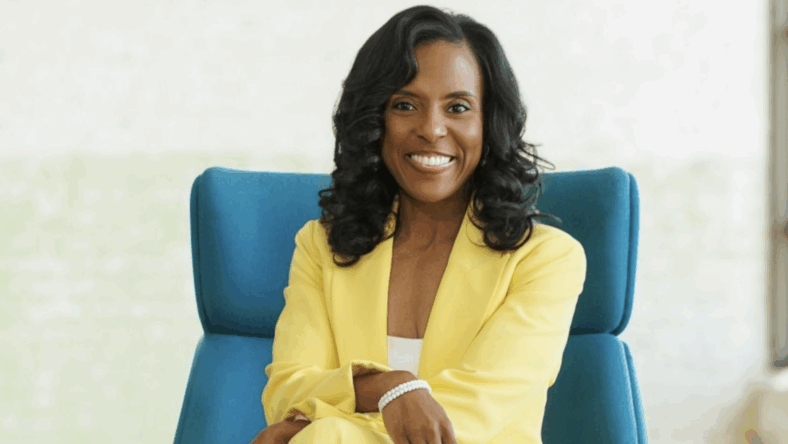
Dr. Marie Feagins announced her run for Shelby County Mayor on Wednesday. A former Memphis-Shelby County Schools superintendent, Feagins is running on stronger education, government transparency, and economic stability. She joined KWAM News Radio live in-studio for an interview with host Todd Starnes. Click here to get KWAM breaking news alerts delivered to your inbox.
You can also listen to the entire interview below:
Starnes: Dr. Feagins, you made a major announcement yesterday. And I think the entire city is talking about this. There is a lot of buzz around the fact that you are now running officially to be the next mayor of Shelby County. And my first question is, why in the world do you want that job?
Feagins: You know, it was probably one of the questions I asked as well. I am deeply connected to my faith, and so a lot went into the decision. Certainly did not wake up and say, you know, I can’t wait to be the mayor, and I don’t mean that in a condescending way, but being very intentional about thinking about this, right? We’re talking about people and how we impact a county for the next 10 to 20 years with decisions that will be made and those that wouldn’t be made. And so, you know I think leadership is leadership, and I’m prepared to lead in any arena. I’ve thought about what people have shared with me across the 901 since I’ve entered here, you know, in 2024, and I believe that this moment calls for a leader of my caliber.
Starnes: We covered the controversy at the school board and I think it opened up a lot of people’s eyes to a lot of the problems facing the city of Memphis and Shelby County. A lot of concerns that people have about how money is being spent and I mean the list goes on and on and on. What lessons did you learn out of that that you believe will be helpful if you become the next mayor of Shelby County?
Feagins: Yeah, I think there are a few things. One, you know, I am still firm on making decisions using data. And so, you know, nothing to walk back in terms of decision making. What I would say is that I would do a lot more of the communication, take that on myself. And you know it is important to have a great team around you, but it’s also important to be the leader of the communication in terms of someone who respects transparency. So that’s one. Two, I believe there was just a lot of information that was being communicated in general that people had not naturally heard, that I presumed had been shared. As someone who just makes decisions in that way. Three, when you bring a community along, I think this is what you get, and that was intentional for me. I don’t believe that we can make decisions without speaking with, sitting with the folks who were impacted by it. But also I came into a system that was already broken with a commitment and an intention to do some great work. And so really clear about what I was walking into, but I have always been one to run to the fire, and believe that I can do something to affect change in a positive way, and I still believe that today.
Starnes: I think a lot of people were struck by the ugliness that was directed at you and just the meanness and the nastiness. And look, I’ve been in politics for a long time. They’ve called us every name under the book, you know? And you’ve been, look, when you’re in a leadership position, you get a lot of that. But did it surprise you the level of vitriol that was being directed? You’re coming into this city, doing a great job, trying to help the kids learn how to read and write and actually show up at school, and they’re coming at you like a bunch of mean girls.
Feagins: You know, I have never been involved in anything like this in my life. And so, you know, even through high school, middle school, when you expect for, you know engagements and interactions like that to take place. And so I can’t say that I’m surprised by anything because I’ve seen a lot. But I do know that I just don’t get in the mud, right. And so it’s important to me to be a model for the very people that, you know, I’ve been working with for so long. But it’s also always important for me to demonstrate good character. I think sitting through that was something different. It was something that I’ve processed on the other side as I’ve always sought to try to understand and get to the root of a thing. And I don’t know that I have gotten there just yet.
Starnes: What would you say are the top three issues? You’ve sat down, you’ve done your homework, you’ve researched, you made your decision. You mentioned it was a thought out decision here. What do you think are the three major issues facing Shelby County?
Feagins: You know, I don’t think that they’re separate, and I know that that’s how we speak on them, but I don’t think that they’re separate. I think when we talk about crime, when we think about public safety, we think about health care access, or the lack thereof. When we think about transportation and strengthening families, I think it’s all connected to the very thing that I’m positioned in, and that’s education. If we strengthen our community in terms of skill set, in terms of folks who really can see a path forward. Then we do reduce crime, we do create safer spaces. And so if I had to just do three, then it’s public safety, it’s education and workforce, and then we’re talking about housing stability and healthcare.
Starnes: We have one of the most diverse listening audiences, I think, in all of the radio here in Memphis. So we have a lot of listeners in Whitehaven and Frayser. We also have a lot in Germantown and Collierville. And to a person, people that are calling into this station are so thankful for the work of the Memphis Safe Task Force. I know Mayor Lee Harris is rapidly opposed to the task force being here. And yet, when you look at the announcement coming out from the mayor’s office just a few days ago, crime is now at a three-year low. If you were County Mayor, would you welcome the Memphis Safe Task Force and do you see that as being helpful to reducing crime here in the Mid-South?
Feagins: So you know, I support safety, you know period. As I think about what that looks like, I think we can hold two truths at the same time. There are people who believe that the resources here are helpful in making us feel safer. And there are those who believe that they are targeted and hey, this is not sustainable and we need to do something different. I think as County Mayor, my responsibility is to figure out the prevention pieces first that would prevent us from being in crisis situations and emergency measures like this. I believe that when we make the investments in people, in these areas that I mentioned earlier, then we don’t have to have a task force or someone who is sending additional resources in. But I think the increased visibility is what people like. I believe that if you have conversations in some spaces, then you can get to the root of it. I have not had the opportunity just yet to hear from the community, but I would welcome what would look like safety for us. But that’s here, I believe that local government is responsible for that first and foremost.
Starnes: As a taxpayer for me, and we’re going to have you on as many times as you want to get up early in the morning and come on KWAM because there’s a lot of ground to cover. And I think we’re really at a pivotal point in Memphis and Shelby County. Do we want to thrive and grow or are we willing to go back to just business as usual? And you do not strike me as a business-as-usual kind of person.
Feagins: You know, I think status quo is how we got here, right? Just our commitment to complacency and just an unwillingness to work together. You know? Safety is not partisan. Education is not partisan. There are no two sides to healthcare access, to what safety is, right. And so, if we’re just willing to get to the table, have some real conversations, hash out some solutions, and then more importantly, Todd, implement and execute, right? We get stuck in good ideas, and we never make and take the steps necessary. And so, you know, business as usual, I don’t think will work moving forward. Now just ripping the bandaid off in some areas, I think would be a little too aggressive, but there’s an opportunity to strike a delicate balance.
Starnes: We have a lot of people weighing in on our Facebook Live page, and Kay asked a very interesting question. Dr. Feagins, how would you bring the community together, the city and the suburbs, to make a stronger Shelby County?
Feagins: You know great question and hello Kay if you’re listening in. I think that you know I had conversations with municipal mayors just maybe a week or so ago, very refreshing from their perspective for sure and certainly for mine. What I shared with them is I see this as an opportunity to be the connector for the county. This is not being a Memphis 2.0 mayor. I’m pretty clear on what this role is. And it’s about being a leader who understands that the county sets the table and then all of the municipals and the cities come to it. We have real conversations about what we need. Collierville knows what Collierville needs. Germantown knows its people and its pain points. I think Shelby County Mayor and my role in that regard would be to bring us together in terms of going together to Nashville and DC, bringing resources to the city and the county, going to DC together as a joint legislative team. And so it’s having an agenda that reflects the overall needs of Shelby County but the nuanced needs and perspectives of the municipalities.
Starnes: I want to get another question here. This is Colby writing and he says unlike the current mayor, will you work together with the new sheriff to tackle infrastructure issues at the jail and other county buildings?
Feagins: Absolutely. You know, relationships are foundational in any regard, but certainly with the sheriff and the sheriff’s department. And so establishing that foundational relationship, already have a good relationship with both Sheriff Bonner and certainly Deputy Chief Buckner, second in charge. But any sheriff, I have, you know, reached out to a few candidates to have conversations, just to see their perspectives and really, Todd, to see, you know what are your intentions? Do you have some real plans in order to how we both address immediate conditions in the jail? And we think about realistic next steps in terms of an approach.
Starnes: I’ve got to give Richard credit for the question I’m about to ask, because I was about to ask this question, but DOGE, you know, its work has been so effective on the federal level going in and just finding all of the wasteful spending in government. Would you consider going in, and doing a DOGE-style committee here locally in Shelby County? Just open up the books, and like these slush funds that the county commissioners have, it drives me nuts as a taxpayer. Knowing that our money is being used for things that we may not necessarily need to be using it for.
Feagins: You know I don’t know if it would be comparable to DOGE but I am a believer in efficiency and transparency and I do believe that taxpayers deserve to know how our money’s being spent. Certainly part of my previous role was doing just the same. How are we using the funding that we have? What is it being allocated to, and more importantly Todd you know what are the outcomes attached to these investments? And so certainly taking a hard look, have done so with the current budget. I do believe there’s some opportunities right you know to use funds that we have, to go after more funding as well, but certainly be very clear with taxpayers what we’re doing with it.
Starnes: Michael writing in. Tell her to run as an Independent. First of all, I loved what you did with our school district. I loved it. And people would always ask me, is she a Republican? I said, I have no idea. I do not know her politics. And I appreciated that about you because you kept it out of what you did. And I have great respect for that. You’re running as a Democrat. What is it about the Democrat Party? What are the precepts about the Democrat party that you embrace?
Feagins: You know, if I believe that, you know, we could just do this without having to choose “a side,” that’s exactly what I would do because, as you mentioned, as an educator, my responsibility was just to human beings to advocate for what’s best for children and families and a community attached to it. And that’s, you know, Todd, exactly the perspective that I’ll take on here. But I did pitch and petition as a Democrat. That’s how I’ll run. We’re in a blue city. But my values, I believe, are just values that people have. I am moderate in terms of thinking of how we do things. I believe in accountability. I believe in transparency, and I believe in just going about this in a collaborative way.
Starnes: So you’re more of a John DeBerry Democrat as opposed to a Jasmine Crockett Democrat.
Feagins: You know, I don’t know about the two. I just really know that how I have led just all throughout my life is sitting with people, having those real conversations, and then seeing how we can go together to do what’s great.
Starnes: You know, Dr. Feagins, when you look at all of the growth in Middle Tennessee in Nashville, Davidson County, the skyscrapers going up all over the place and yet here we are watching an exodus of our population. How do we get the young people to stay in Shelby County? How do we get them to start their families here, buy homes here, and when can we start to see that kind of growth? What’s the plan?
Feagins: You know, economic growth, social mobility part of the platform and certainly thank you for mentioning the website. There are 48,000 18-26 year-olds who have never voted in a mayoral primary and so we certainly have work to do and a huge opportunity to get our youngest leaders involved. I think it’s speaking their language, it’s having conversations with them which is what I’ve been doing. You know, seeing this as a place not that they just call home because they were born and reared here but as a place that they can live and thrive. And so can they have a family here? Yes, but can I go and have fun? Which is a major part of it as well. And I think the opportunity to do that is with sharp investments.
Starnes: What kind of a county are you going to be inheriting in your mind? Are we looking at a lot of dumpster fires burning here?
Feagins: You know, I think there are a lot of opportunities. There are a lot of challenges. We’re talking about Regional One. We’re talking about a jail that needs to be thought out. We are certainly talking about schools and schools that need to be built, schools that need to have decisions made, certainly an education system, public education system across the board that needs to be strengthened. If we don’t get education together, we’ll be having the same conversation in the next 10 years. And so yes, inheriting a lot of opportunities to do some great work.
Starnes: This is what bothers me. When we’ve got over 70% of the kids can’t read at grade level, that tells me that as taxpayers, we’re not getting our money’s worth out of that education system, and it’s not working, and we have got to get that fixed.
Feagins: Immediately. When we look and think about literacy and numeracy, we pretty much know how the job force is going to look. We know what’s going to happen in crime. This is just data. It’s not opinion. And so yes, if we do not immediately do something unique and new with the education system, we’ll continue to have these same issues.
Starnes: That breaks my heart to know that we got kids walking around Memphis that can’t read because that’s the key right there. You know, if you’ve got a child that can read, they’ve got a chance at living that American dream and we’re not preparing these kids.
Feagins: Correct, if you have a child who can read on grade level, that means they can comprehend, they can fill out job applications, they can start their own business and be resourceful. They will certainly find something safe to do and make better decisions. And so yes, the root of all of this is certainly a better quality education.
Starnes: We have Republicans, and you may be surprised to know this. This is the bluest part of Tennessee, and there has not been a lot of cooperation, I think, especially with the current County Mayor and our delegation, and that delegation does include Republicans. Mark White on education, a very important role as chair of that committee. State Senator Brent Taylor, John Gillespie, just some of the folks in our delegation. Will you work with those guys, and have you had any conversations with them yet?
Feagins: I will continue to work with them as I did as superintendent. I think that like I shared earlier, relationships are important, they’re foundational. This is not partisanship, right? The issues that we have and the opportunities that we have in front of us require us to work together. And so I think, that’s absolutely the only way and I’m prepared to continue to do so.
Starnes: All right, I have some non-political questions. We’re going to get you back on. And what we’ll do, I think what we need to do is just take one issue per visit. So because there’s so much to talk about. But Christmas is right around the corner. A lot of people don’t know you, right? I mean, they just see what you see on TV, on the news. But what does Marie Feagins do for Christmas? What does that look like?
Feagins: You know, Christmas is family. The Christmas tree has been up for quite some time here. I leave mine up all year.
Starnes: Do you really? You’re one of those people.
Feagins: And I don’t change it, you know decorations for different holidays. I just leave it up. I think that you know what the holidays and Christmas bring for all of us is such a warm spirit. I really like how we treat each other, I wish I could just bottle that up and take it throughout the year. And so Christmas for me is family. You know, I don’t like to get out and do all the shopping. I do a lot of online ordering pretty much last minute as though Christmas doesn’t fall on the same day every year.
Starnes: Okay, I like you again now. Okay, this is good. Let me ask you, you know you’re a person of faith. Will that play a big role in what you do and how you operate if you’re elected mayor?
Feagins: Yeah, so I think it’s about the pause for me. It’s about seeking thought and just alignment that is outside of just my flesh and what I want to do. What is the natural best step in terms of what would help people in general and what does that look like? And I’m a faith warrior.
Starnes: I love it. Dr. Marie Feagans, thank you for joining us here on KWAM this morning.
Categorized:Local News politics